Matching Ro water purification systems Specifications to Your Application Environment
Catalogue specifications describe products in laboratory conditions; your application is not a laboratory. Dust, humidity, duty cycles, voltage fluctuation and user behaviour all move the requirements. This guide shows how to translate your real RO water purification systems operating environment into specification lines that suppliers can actually design against.
The gap between catalogue and context is where most product disappointment lives. Your warehouse is hotter, your users rougher, your power dirtier and your duty cycle longer than the brochure assumed. Closing that gap on paper â before tooling â is what application matching means in practice.
The guidance is based on the experience of é西è¾æ©ä¼¦ç¹é
¿é ææ¯æéå
¬å¸ (www.aelt-brewing.com), which supplies RO water purification systems, Drinking water production lines, industrial water purification equipment to customers worldwide.
Key Specification Factors
Before choosing a product, define the application requirements. These factors determine everything else.
Duty cycle: how often and how hard the product will work.
Environment: temperature, humidity, dust, corrosion and exposure.
Regulatory requirement: the standards that apply in your market.
Interfaces: dimensions, connections and compatibility with existing systems.
Lifetime expectation: the service life you need before replacement.
Maintenance access: how easily the product can be serviced.
Budget versus total cost: the balance between purchase price and lifetime cost.
Primary Applications for Water Treatment And Beverage Processing Equipment
Ro Water Purification Systems and related products are used in a wide range of settings. Understanding the demands of each helps match product to purpose.
Bottled Water Plants: requires reliable performance and appropriate compliance, with duty cycles that vary by application.
Beverage Factories: requires reliable performance and appropriate compliance, with duty cycles that vary by application.
Food Plants: requires reliable performance and appropriate compliance, with duty cycles that vary by application.
Municipal Water Projects: requires reliable performance and appropriate compliance, with duty cycles that vary by application.
In each case the specification should be driven by what the application demands, not by what happens to be in stock.
Matching Product to Application
Different applications place different demands on the same category of product. A configuration suited to light duty will fail quickly under continuous operation, while an over-specified product wastes money.
| Application | Duty Level | Key Requirement | Specification Focus |
|---|
| Light duty | Intermittent | Basic reliability | Standard configuration |
| Medium duty | Regular | Consistent performance | Reinforced components |
| Heavy duty | Continuous | Durability and serviceability | Premium materials |
| Critical duty | Continuous, safety-relevant | Redundancy and compliance | Certified, monitored systems |
Ask the supplier to recommend a configuration for your specific duty level rather than defaulting to the cheapest option.
Environment and Durability Considerations
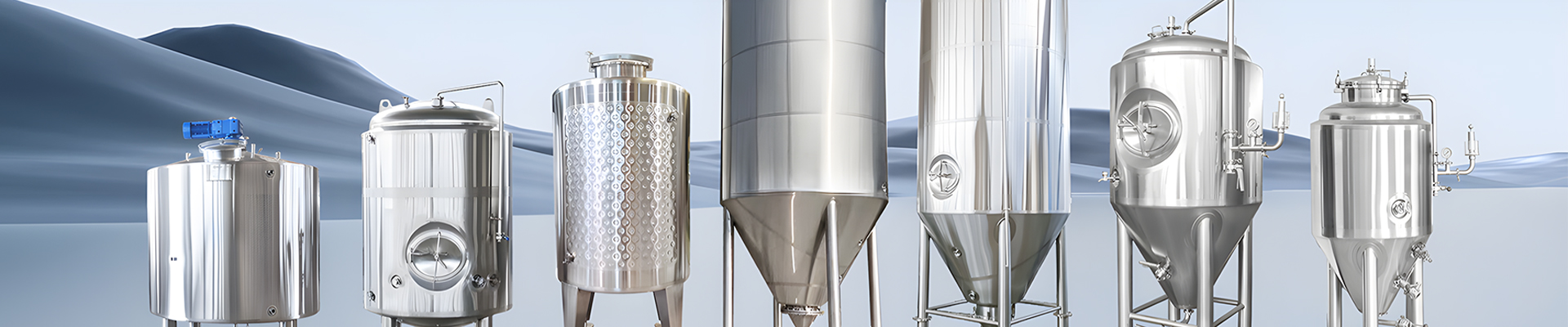
The operating environment is often the single biggest driver of product life.
Temperature: extreme heat or cold affects materials and lubricants.
Humidity and moisture: drives corrosion and electrical risk.
Dust and particulates: accelerates wear and blocks ventilation.
Corrosive atmospheres: requires specific material grades.
Vibration and shock: demands robust mounting and fastening.
Specify the environment explicitly. A product that performs well in a clean workshop may fail outdoors or in a chemical plant.
Writing a Specification Suppliers Can Quote
A good specification is unambiguous. It states the requirement, the conditions, and the acceptance criteria.
State the application and duty cycle.
List the environmental conditions.
Define the performance requirement.
Specify the applicable standards.
State the interface and dimensional requirements.
Define the acceptance criteria and documentation.
State the packaging and delivery requirement.
When two suppliers quote very different prices, it is usually because they interpreted the specification differently. Precision removes that risk.
Installation and Commissioning
Correct installation protects performance and warranty. Follow the manufacturer's instructions, verify the mounting and connections, and commission the system before full operation.
Ask for installation documentation and, where relevant, on-site support. A supplier who provides clear commissioning guidance reduces the risk of premature failure.
Maintenance and Lifetime Cost
Lifetime cost is driven by maintenance frequency and the availability of spare parts. A product with a slightly higher purchase price but longer service intervals often delivers a lower total cost.
Confirm the recommended maintenance schedule, the availability of consumables and spare parts, and the expected service life under your duty cycle.
Application Matrix
This matrix summarises how requirements change across applications and helps you position the product correctly.
| Application | Typical Duty | Environment | Regulatory Focus | Lifetime Priority |
|---|
| Industrial production | Continuous | Indoor, controlled | Safety standards | Uptime |
| Outdoor and field | Intermittent | Variable weather | Environmental standards | Durability |
| Process and utility | Continuous | Varies | Application standards | Reliability |
| Commercial use | Regular | Indoor | Product safety | Cost of ownership |
| Critical systems | Continuous | Controlled | Certified compliance | Redundancy |
Use the matrix to sanity-check a proposed configuration: if the product's rating does not match the duty and environment, it is the wrong choice even if the price is attractive.
Standards That Govern Each Application
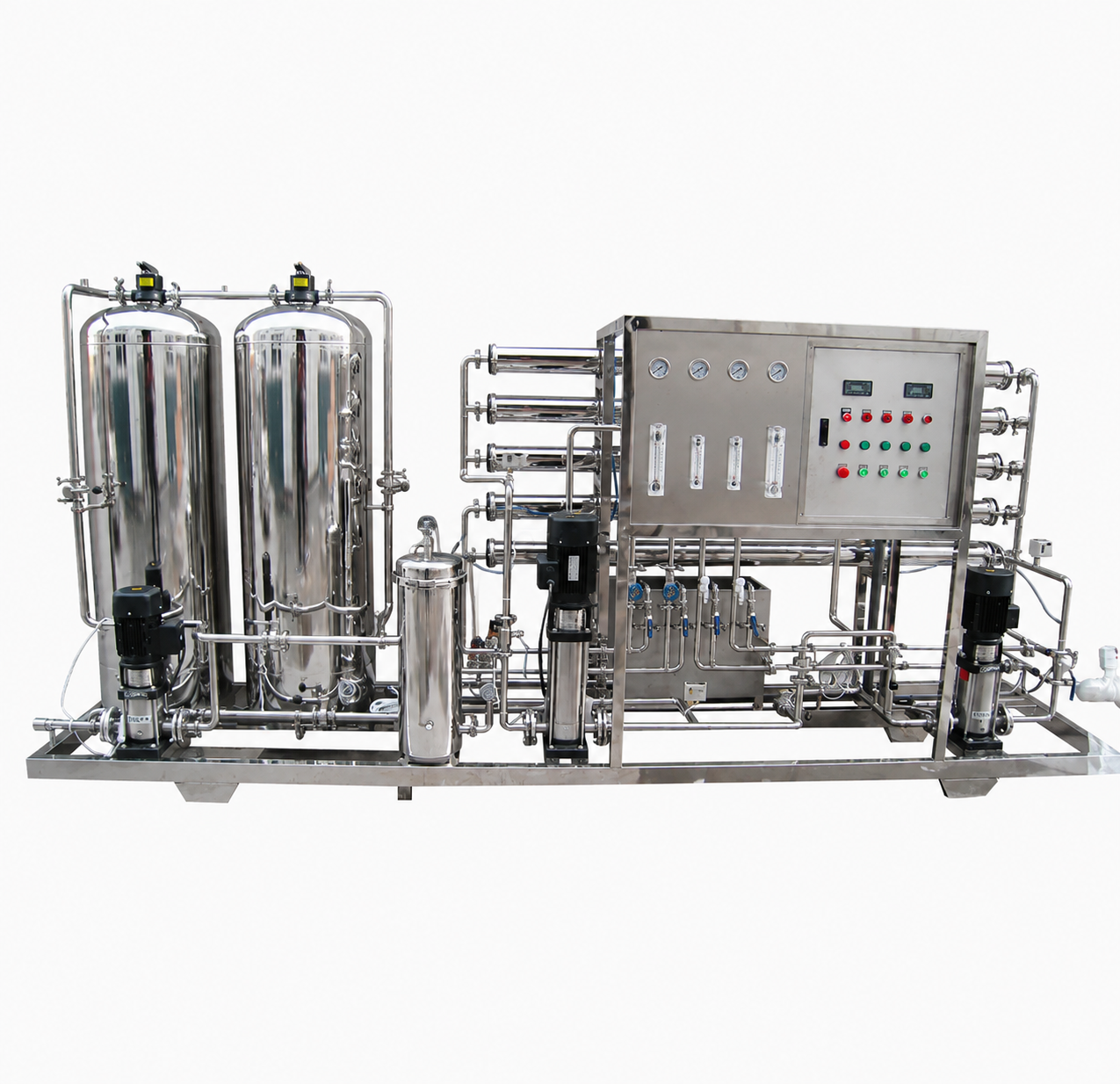
Different applications invoke different standards. Confirm which apply to your use case and market.
WHO drinking water guidelines: confirm applicability to your application and market.
NSF/ANSI 61: confirm applicability to your application and market.
ISO 9001: confirm applicability to your application and market.
CE: confirm applicability to your application and market.
CE: request evidence of compliance where required.
ISO 9001: request evidence of compliance where required.
NSF/ANSI 61: request evidence of compliance where required.
Specifying and Procuring, Step by Step
This sequence turns an application requirement into a delivered product.
Define the application and duty cycle.
List the environmental and regulatory requirements.
Write the performance and interface specification.
Request configurations from two or three suppliers.
Compare proposals against the specification, not against price alone.
Approve a sample and confirm the configuration.
Arrange installation and commissioning documentation.
Establish a maintenance and spare parts plan.
What Should a Ro Water Purification Systems Field Trial Measure, and For How Long?
A field trial earns its cost when it measures the failure modes your customers would actually meet, for long enough that those modes can appear. The matrix below converts trial duration into the questions it can credibly answer for {p0l}:
| Trial Length | What It Credibly Tests | What It Cannot Test |
|---|
| 1â2 weeks | Out-of-box function, usability, first impressions, packaging survival | Wear, fatigue, environmental degradation |
| 4â8 weeks | Duty-cycle durability, user-workflow fit, service access | Seasonal effects, long-term ageing |
| 3â6 months | Failure-rate trends, maintenance cadence, spare-part consumption | Multi-year lifecycle economics (model these instead) |
Structure beats duration: fifteen units across three real use sites for four weeks answers more than fifty units handed to friendly employees for a weekend. Log every observation against unit serial number and use intensity, hold a mid-trial check at the halfway point, and finish with a debrief that produces a ranked defect list and a go/no-go with reasons. Suppliers take structured trial reports seriously â a document with serial numbers and dates moves engineering; a vague complaint moves nothing.
Frequently Asked Questions
How do I choose between standard and custom configuration?
Start from the standard configuration and identify where your application demands something different. Customization should solve a specific requirement, not add cost without benefit.
How long should the product last?
Service life depends on duty cycle, environment and maintenance. The supplier should be able to state an expected life under defined conditions, and you should verify it against your duty level.
What environmental conditions matter most?
Temperature, humidity, dust and corrosive exposure are the most common drivers of premature failure. Specify them explicitly when requesting a quotation.
Is a higher specification always better?
No. Over-specification increases cost without adding value if your application does not need it. Match specification to duty.
What documentation should accompany delivery?
At minimum, a specification sheet, installation instructions and compliance documentation where applicable. For complex products, request commissioning guidance.
How important is spare parts availability?
Very. A product that cannot be serviced quickly becomes a liability. Confirm the availability and lead time of critical spares before ordering.
Can the supplier help with system integration?
Many manufacturers provide application support and interface guidance. Ask about the level of technical support included.
How do I compare products from different suppliers?
Normalise the specification, then compare on lifetime cost including maintenance and spares. A like-for-like comparison avoids misleading price differences.
Preparation That Moves Supplier Negotiations More Than Talking Does
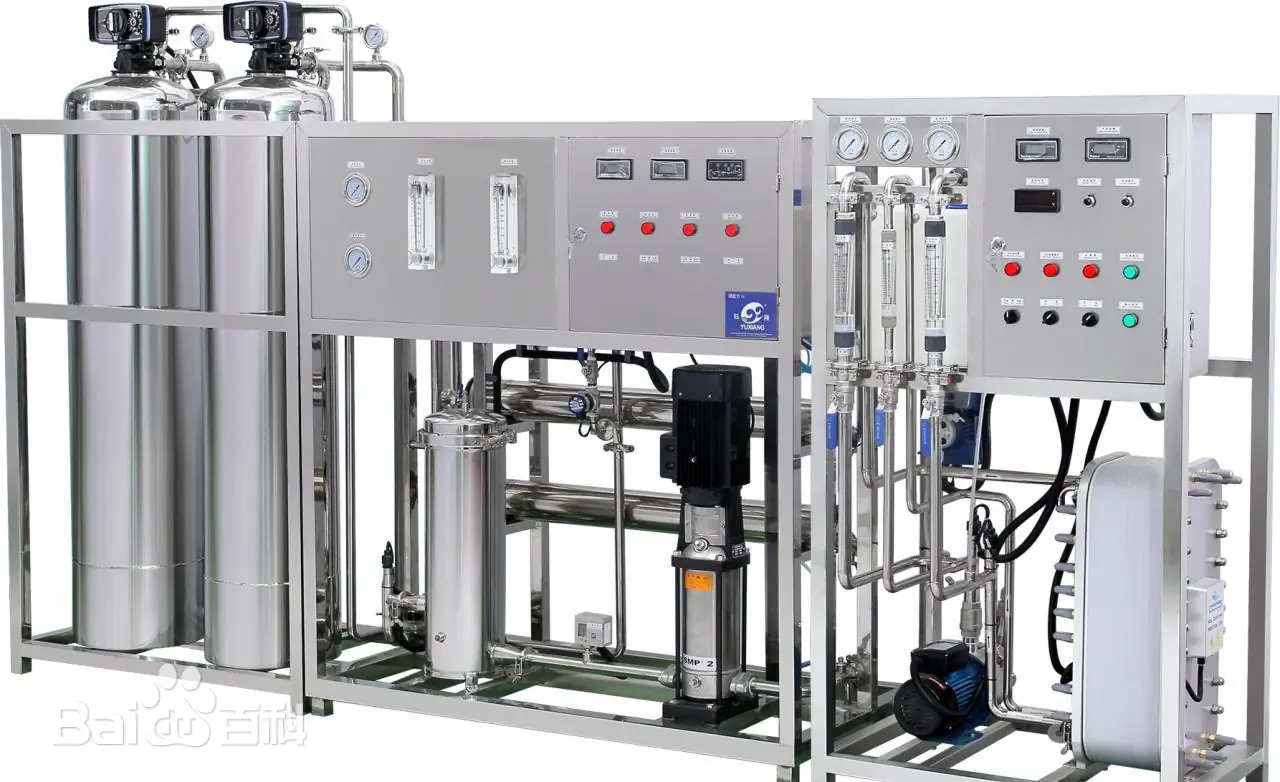
Most negotiation outcomes are decided before anyone sits down: by the quality of the brief, the completeness of the comparison and the realism of the targets. Buyers who prepare on paper negotiate positions; buyers who prepare on data negotiate facts. The preparation stack that consistently pays for itself:
| Preparation Item | Effort | What It Changes at the Table |
|---|
| Normalised quote comparison | 2â3 hours | Replaces 'your price is high' with a specific, sourced gap figure |
| Volume forecast by quarter | 1 hour | Unlocks capacity commitments and better pricing bands |
| Specification frozen with revision ID | 2 hours | Removes the ambiguity surcharge hidden in every vague RFQ |
| Market cost intelligence | 3â4 hours | Material indices and freight levels turn opinions into arithmetic |
| Walk-away position written down | 30 minutes | Prevents the slow drift past your own limits in the room |
| Relationship history one-pager | 1 hour | Scorecard trends justify why you ask for what you ask for |
Notice what is absent: scripts, bluffs and theatrics. Suppliers hear through all three within minutes â they negotiate daily, you do not. Data is the only leverage a part-time negotiator has, and the good news is that it is the stronger lever anyway.
Environment Mapping: Translating Conditions Into Specification Lines
Application environments fail products in specific, nameable ways, and each maps to a specification line you can write down before the order:
| Condition in Your Environment | Failure Mode It Causes | Specification Line to Add |
|---|
| Ambient heat above standard | Derating, shortened service life | Rated operating temperature with margin over your measured maximum |
| Dust or particulates | Jamming, abrasion, overheating | Ingress protection rating matched to the real exposure |
| Humidity or salt air | Corrosion, electrical faults | Material and coating requirements, plus relevant test method |
| Voltage fluctuation | Component stress, intermittent faults | Input tolerance range wider than your measured variation |
| Continuous duty | Fatigue failures at weak points | Duty-cycle rating and design-life statement in hours or cycles |
| Untrained or varied users | Misuse damage, safety exposure | Guarding, interlocks and instructions rated for non-expert use |
Spend a week measuring rather than assuming â a cheap data-logger on your own site beats a catalogued guess every time. Suppliers design confidently against numbers and defensively against adjectives, and the price difference between those two postures usually exceeds the cost of the logging equipment by an order of magnitude.
Pilot-to-Programme Gates: What to Verify Before Scaling Volume
The pilot proved the product; scaling must now prove the process at volume, and the two are different risks. Four gates separate a pilot from a programme, each cheap relative to what it protects: capacity evidence (can they produce your target volume monthly without overtime heroics â ask for the plan, not the promise), consistency evidence (three consecutive conforming lots, not one beautiful first lot), service readiness (spares list, documentation, support contacts confirmed in writing), and commercial stability (price validity, capacity reservation, and the review rhythm agreed before volume makes renegotiation asymmetric). Buyers who skip the gates usually meet the missing one within two quarters â as a failure with a volume multiplier attached.
A Costed Risk View: What Each Sourcing Shortcut Actually Costs
Risk conversations stay abstract until the rows carry numbers. The table below prices the shortcuts buyers take most often â the figures are conservative industry ranges for mid-sized orders, and the shape of the arithmetic holds across the water treatment and beverage processing equipment category:
| Shortcut Taken | Typical Saving Up Front | Expected Cost When It Bites | Net Position |
|---|
| Skipping certificate verification | Days of admin | Failed compliance review; retest and relabel cycles | Strongly negative |
| First quote accepted without comparison | A week of RFQ time | 8â20% price premium, locked for the relationship | Negative within one order |
| Golden sample skipped | One approval loop | Disputes on every subsequent order | Negative by the second order |
| During-production inspection dropped | One inspection fee | Rework at 3â10Ã the fee if a systematic defect runs | Negative on defective lots |
| Single-source for a hero SKU | Simpler management | Outage exposure on your best-selling line | Catastrophic in outage years |
None of the prevention lines is expensive in absolute terms; the expense is remembering to do them. This is why the checklist in the closing section exists â printed, pinned, and applied to every order including the routine ones.
Reading a Supplier's Silence: What Slow Replies Usually Mean

Response latency is data. A supplier who answers specification questions within a day and goes quiet for a week when asked about certificates is telling you where the weakness lives. Slow replies pattern into recognisable causes: capacity overload (they are prioritising paying customers â you are not yet one), internal dependence (the salesperson must chase engineering for every technical answer, and engineering is not chasing back), or discomfort (the answer is unwelcome and being drafted carefully). Each cause has a different remedy â allocate volume gradually, insist on direct engineering contact, or treat the evaded topic as your audit focus. What silence never means is that the topic went away; buyers who let one question drift usually meet it again as a shipment problem.
Annual Cost Review: The Hour That Pays for the Whole Programme
Once a year, reprice the programme against the market: refresh the landed-cost model with current freight and material indices, re-run the TCO comparison across your incumbent and two alternates, and re-check the duty and compliance picture for every destination market. The review has two honest outcomes â confirmation that the incumbent still wins (worth knowing, and worth telling them) or discovery that the market moved (worth knowing before your customers notice your prices). Either outcome justifies the hour. The buyers who skip it are not saving an hour; they are deferring it, with interest, to the quarter when a competitor's price forces the same analysis under deadline pressure.
Questions Buyers Ask About Water Treatment And Beverage Processing Equipment â Answered Directly
Is a higher price ever the better sourcing decision?
Regularly â wherever the price difference buys documented capability: better process control, faster engineering answers, stronger compliance files. The correct comparison is never unit price against unit price; it is total cost of ownership against total cost of ownership. On that basis a ten percent premium that halves defect rates and eliminates compliance friction is usually the cheaper number, and your accountants will confirm it once the claim and rework costs are attributed to the product line honestly.
How much volume do I need before suppliers take me seriously?
Less than most buyers fear, provided the volume is predictable and the buyer is organised. Suppliers rank accounts by forecast reliability and communication quality before absolute size: a small buyer with a written quarterly forecast and clean specifications gets better allocation than a larger buyer whose orders arrive erratic and under-specified. Predictability is the currency; volume is just the exchange rate.
Can I run two suppliers for the same product without conflict?
Yes, and on any critical line you should. The mechanics that keep it peaceful: transparent volume splits announced to both, identical specifications issued to both, and performance â not promises â deciding share adjustments each quarter. Suppliers accept rational diversibility far better than discovery of it, and the competitive tension tends to keep both factories attentive in ways a monopolised account stops being.
What single document prevents the most disputes?
The approved golden sample record â specification revision, sample ID, seal location, photographs, sign-off names on both sides, referenced in every purchase order. It is the arbiter for almost every workmanship disagreement, and its absence converts each one into an opinion contest. Runners-up: the frozen one-page specification and the written AQL plan, both of which settle the disputes the golden sample cannot.
How do I get engineering answers instead of sales answers?
Ask for the channel explicitly: request that a technical contact be named at qualification, copy them on specification questions, and structure one direct engineering call per quarter. Suppliers route answers to whoever asks credibly â buyers who accept all answers through sales will keep receiving sales answers, politely rendered and technically thin. The factories worth buying from have engineers who enjoy these conversations; if the channel never opens, treat that as capability data.
Building the Second Source Before You Emotionally Need One
Second sources qualified in calm times cost sample orders and a few audits; second sources sourced in crisis cost premiums, quality risk and expedited freight, all at once. The calm-time sequence: keep a live list of two qualified alternates per critical line, refresh their sample orders twice a year so the qualification does not go stale, and let them know their status honestly â 'qualified, currently sharing fifteen percent' keeps a factory attentive without promising volume you do not have. The discipline is less about disloyalty than about realism: factories themselves qualify multiple customers for the same reason, and the ones who object to your symmetric prudence are usually the ones whose dependence you were about to discover the hard way.
A Supplier Scorecard for Ro Water Purification Systems Partnerships: Build It Once, Use It Quarterly
Scorecards convert relationship management from memory into measurement, and the version that survives contact with reality has five weighted lines and no ambition to be a research project. Build it once per category, share it with the supplier â the sharing is the point â and let each quarter's numbers do the talking:
| Scorecard Line | Weight | Measured From | Watch Signal |
|---|
| Quality (defect rate vs AQL) | 35% | Inspection reports, claim log | Two consecutive quarters above target |
| Delivery (on-time percentage) | 25% | Order and shipment dates | Any month below 85% |
| Documentation accuracy | 15% | Customs and compliance events | Any recurring document error type |
| Responsiveness | 15% | RFQ and query turnaround | Median reply time doubling quarter over quarter |
| Improvement engagement | 10% | Root-cause responses, corrective actions | Corrective actions closed late or not at all |
The scorecard's quiet power is symmetry: suppliers see the same numbers you do, arguments become lookups, and improvement conversations start from shared facts. Suppliers consistently invest more in accounts that measure fairly and transparently â measurement is itself a signal that you are a serious, long-term customer worth prioritising when capacity tightens.
How Water Treatment And Beverage Processing Equipment Buyers Should Run the First 90 Days With a New Supplier

The first ninety days set the patterns that persist for years, and the buyers who structure them deliberately get better suppliers than the ones who let habits form by accident. A sequence that works: weeks one to two, the kickoff â specification walk-through with engineering present, contact map agreed, communication rhythm and escalation path written down. Weeks three to six, the first production window â a during-production check scheduled rather than requested, early photos agreed as routine, any specification question answered in writing against the frozen revision. Weeks seven to ten, the first inspection and shipment â full PSI on the first lot regardless of order size, document rehearsal before the first customs entry, and the first scorecard line scored together. Weeks eleven to thirteen, the retrospective â one meeting, four questions: what worked, what surprised us, what we will change on both sides, what gets added to the quality agreement. Suppliers describe buyers who run this sequence as their easiest ramp-ups, and ease, in sourcing, is another word for margin.
The One-Line Rule That Outlasts Every Framework
If you retain nothing else from the guides on this site, retain this: agree everything expensive before it happens, in writing, with someone who has the authority to agree it. Specifications, samples, inspection plans, remedies, prices, schedules â each becomes cheap the moment it is written down and expensive the moment it is assumed. Every framework in these articles is a derivative of that one-line rule, and a buyer who applies nothing but the rule, consistently, will still outperform the majority of the market. The frameworks exist for the days when memory is tired and the inbox is loud; the rule exists for every day.
Long-Term Partnership With é西è¾æ©ä¼¦ç¹é
¿é ææ¯æéå
¬å¸
Everything described across this guide is standard operating practice at é西è¾æ©ä¼¦ç¹é
¿é ææ¯æéå
¬å¸: scored relationships reviewed quarterly, golden samples sealed and honoured across reorders, specifications frozen and version-controlled, and engineering answers that come from engineers. We build the documentation discipline we ask of ourselves into every customer relationship, because it is the same discipline that keeps our own production honest.
If you are comparing ro water purification systems suppliers, rescuing a difficult sourcing relationship, or planning a programme that needs to survive its own growth, send us your specification, your scorecard or simply your hardest question. Judge us by the quality of the answer â then look at the quotation, and you will usually find the two agree.
Application Support
If you are specifying water treatment and beverage processing equipment for a particular application, é西è¾æ©ä¼¦ç¹é
¿é ææ¯æéå
¬å¸ (www.aelt-brewing.com) can help match the product to your duty cycle and environment. Visit www.aelt-brewing.com to discuss your requirement and request a specification proposal.
 +86 29-87031531



 телефон
Комментарий
(0)