Industrial Wastewater Purification & Reuse System
This industrial wastewater purification & reuse system adopts multimedia filtration, activated carbon filtration and reverse osmosis membrane technology. It removes suspended solids, organic pollutants and dissolved salts from wastewater. The treated water can be reused for production, achieving water saving and environmental protection.
PRODUCT DESCRIPTION
Description
The Reverse Osmosis (RO) water treatment system is a high-performance purification solution. It adopts membrane separation technology to produce clean and safe drinking water from various raw water sources. Thanks to stable performance and ultra-high filtration precision, the system is widely applied in industrial production, commercial use and drinking water preparation.
The core of the system is the reverse osmosis membrane. It only allows water molecules to pass through while blocking dissolved salts, bacteria, viruses and organic contaminants. Under pressure, impurities are separated and discharged as concentrated water, ensuring high purification efficiency.
A complete RO system generally consists of a pretreatment unit, pressurization system, membrane filtration module and control system. The pretreatment stage plays a vital role by removing suspended solids, residual chlorine and hardness, which helps protect the membrane from fouling and scaling.
The system can be flexibly designed according to raw water quality, whether it is groundwater, river water, tap water or brackish water. With modular and compact design, it is suitable for both small-scale installations and large engineering projects.
Featuring automatic operation, low energy consumption and stable effluent quality, reverse osmosis (RO) systems have become one of the most reliable solutions for modern water purification. They can also be combined with advanced treatment technologies to meet higher water quality standards.
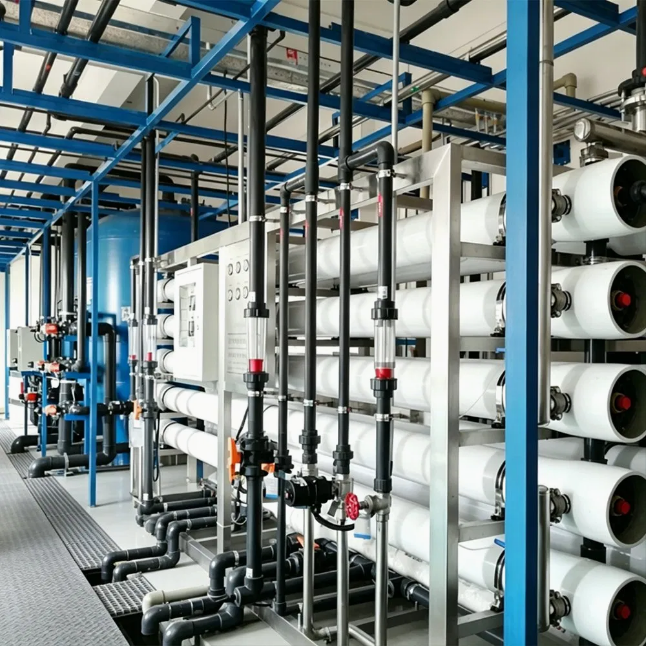
Specifications
Name: Reverse Osmosis (RO) Water Treatment Equipment
Key Materials: RO membrane; 304/316L Stainless steel or food-grade PVC for tanks and pipelines; high-pressure pump (cast iron or stainless steel).
Core Process: Raw water first goes through pretreatment (filtration and softening) to remove sediments and scale. Then the high-pressure pump pushes water through the semi-permeable membrane which retains salts, microorganisms and organic matter. Finally, purified water is produced.
Raw Water Sources: Tap water, groundwater, surface water (rivers/lakes), brackish water and low-salinity industrial wastewater.
Treatment Capacity: Small systems for commercial applications (offices, hotels) normally have a capacity of 0.5–3 m³/h. Large systems for industrial use can reach 1000 m³/h and above. Custom models are available to meet higher requirements.
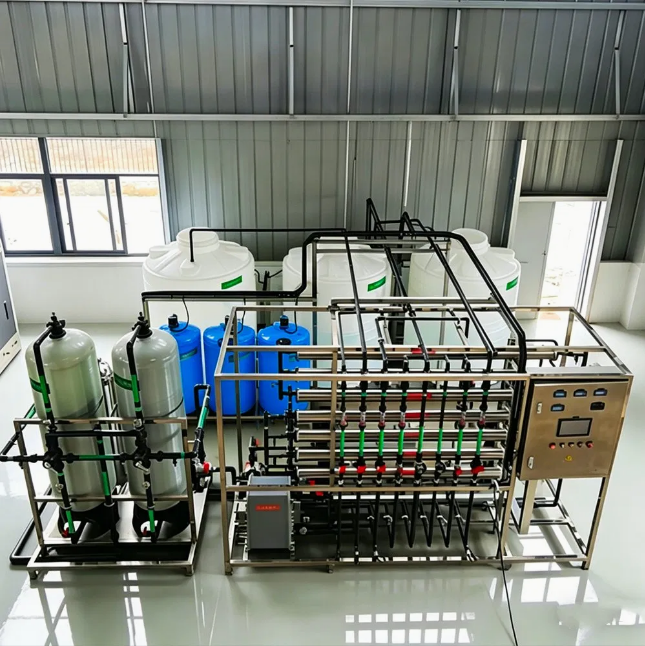
Process flow and Parameters
The three-tank two-stage reverse osmosis system is designed for applications requiring superior water quality. It achieves further refined treatment by adding a second RO filtration stage, upgrading the performance of single-stage configurations.
The pretreatment process remains consistent to ensure feed water is free of large particles, chlorine and hardness. This protects the membrane system and guarantees efficient operation.
During the first-stage reverse osmosis process, most dissolved solids and contaminants are removed. The permeate water from this stage is then fed into the second-stage RO unit for further purification.
The second-stage membrane drastically reduces residual impurities to achieve ultra-low total dissolved solids (TDS) and higher water quality. This makes the system suitable for applications demanding high-purity water.
The two-stage design improves salt rejection efficiency and ensures more stable output, even with fluctuations in raw water quality. It also enables better control over final water quality parameters.
Systems of this type are commonly used in pharmaceutical production, electronics manufacturing and laboratory water preparation, fields with extremely strict water quality requirements.
Parameter | Two-stage Tank | Three -stage Tank |
Filter Cartridge Configuration | Quartz sand+activated carbo+PP cotton +Precision filter+RO membrane | Quartz sand+activated carbon +resin+ recision filter+PP cotton +RO membrane |
Pretreatment Tank Material | FRP/stainless steel |
Applicable Voltage | 220V/380V(Customized) |
Rated Power | 2100W |
Filtration Process | Reverse osmosis filtration,0.0001 micron |
Inlet Water Pressure | 0.1-0.4MPa |
Usage scenarios | Islands,oil fields,emergency disaster relief,well water,river water,groundwater |
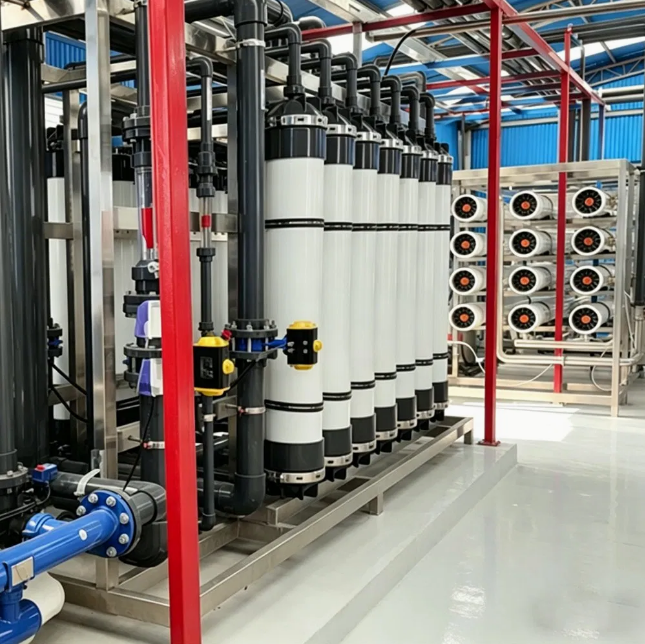
Product Highlights
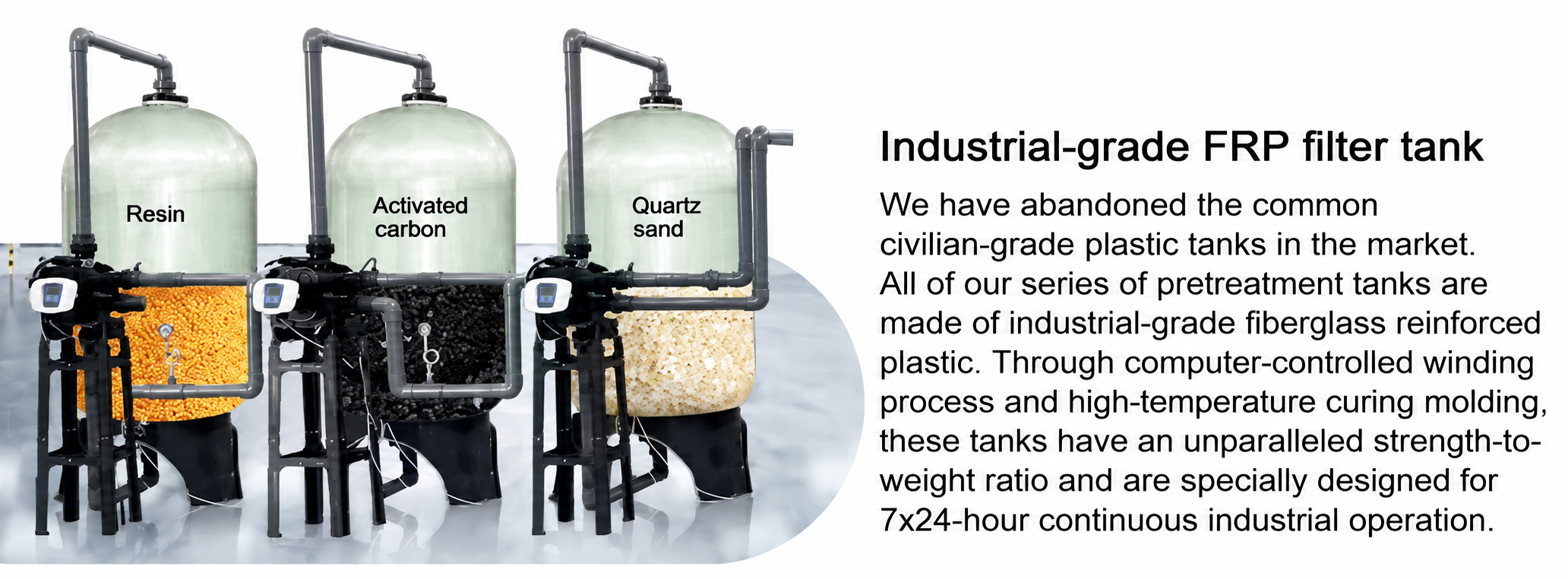
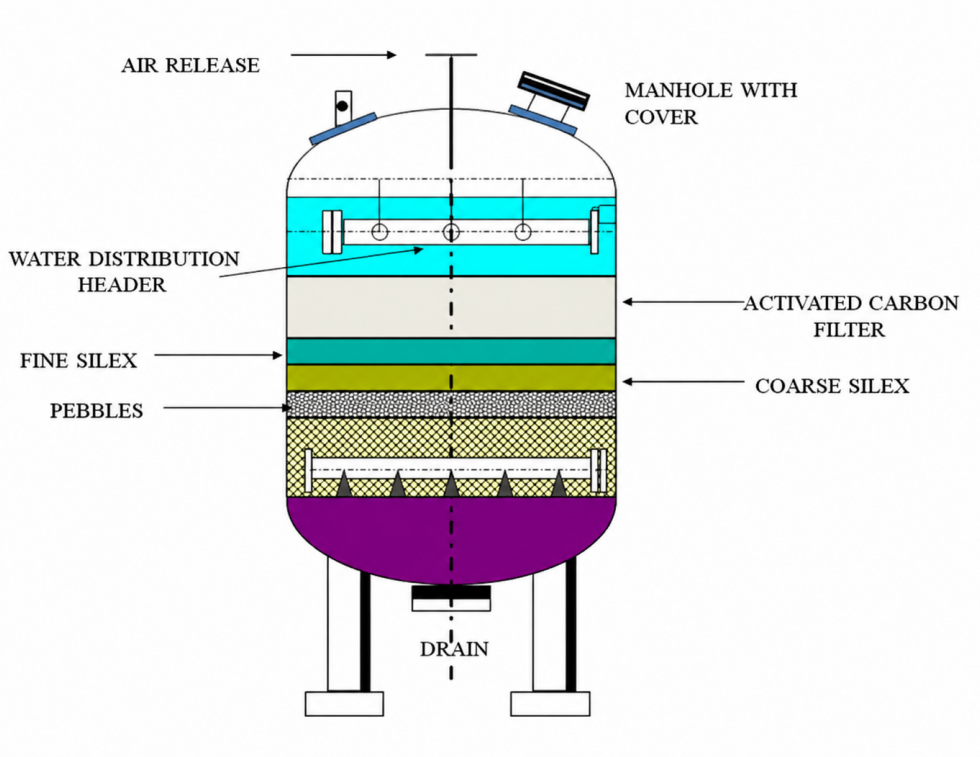
Resin
High exchange capacity (>2.0eq/L),uniform particle resin, low breakagerate, long service life, lowest operating cost, and stable effluent.
Activated carbon
Preferred coal-based charcoal.with a high iodine value (>900-1000mg/g),uniform particles. and protection for RO membranes.
Quartz sand
It features high hardness (Mohs 7)arge dirt-holding capacity, longbackwashing cycle and a servicelife of 3 to 5 years.
Application Scope
1. Drinking Water Production Reverse osmosis systems are widely used to produce safe drinking water for residential and commercial applications. They can effectively remove harmful contaminants and improve water taste, ensuring a reliable and healthy water supply.
2. Industrial Manufacturing Industrial production requires stable water quality. RO systems help reduce scaling and fouling in mechanical equipment, boosting efficiency and cutting maintenance costs.
3. Food & Beverage Processing Clean water is critical for food and beverage production. RO systems remove impurities that may affect taste and quality, guaranteeing product stability and safety.
4. Medical and Pharmaceutical Applications High-purity water is essential for medical use. Reverse osmosis systems supply reliable water for equipment cleaning and pharmaceutical manufacturing to meet stringent industry standards.
5. Seawater and Brackish Water Treatment Reverse osmosis technology is ideal for seawater desalination. It converts saline water into usable fresh water, which is vital for coastal regions and areas suffering from water shortage.
6. Laboratory and Research Applications Laboratories require high-quality water for experiments. RO systems deliver a stable and pure water source to ensure accurate and dependable test results.
7. Agricultural Irrigation RO-treated water can enhance irrigation quality. It reduces salt content and preserves soil structure, supporting better crop growth and higher yields.
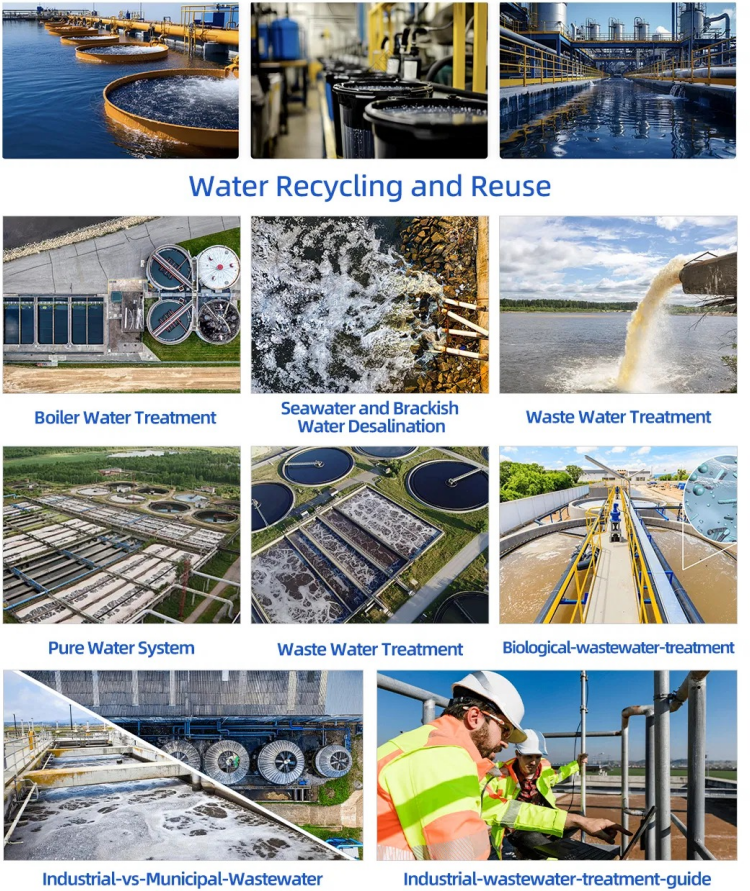
8. Wastewater Reuse System Reverse osmosis (RO) systems are applied for water recycling and reuse. They help lower water consumption and environmental impact, enabling sustainable water resource management.
FAQ
Q1: What project details should be submitted before getting a proposal?
A: To prepare a suitable solution, please provide raw water source (tap water, river water, borehole water, seawater, etc.), water quality analysis or TDS value, required water output capacity, intended application, discharge standard (if any), and installation country or site conditions.
Q2: What production capacities are available for your RO equipment?
A: Our standard configurations cover small systems of several hundred liters per hour up to large industrial units with a capacity of more than tens of tons per hour. Custom capacities are available according to project requirements.
Q3: Are your systems suitable for high-salinity or seawater sources?
A: Yes. We design different configurations for fresh water and seawater treatment. Suitable membranes, pressure levels and corrosion-resistant materials are selected based on salt concentration.
Q4: Will auxiliary filtration stages be included in the system design?
A: Certainly. Depending on feed water conditions, we may integrate multimedia filtration, activated carbon units, softening processes, chemical dosing modules, and additional polishing steps after reverse osmosis treatment.
Q5: Can electrical specifications adapt to different countries?
A: Yes. System voltage and frequency can be adjusted to comply with local electrical standards. We normally supply equipment compatible with international industrial power requirements.
Q6: Is technical support available during installation or commissioning?
A: We provide detailed operation manuals and remote commissioning support. On-site engineering assistance can be arranged upon request, subject to project scope and customer needs.
Q7: Which consumable materials need regular replacement?
A: Regular consumables include pre-filter elements, anti-scaling chemicals, and membranes with a relatively long service life. Replacement cycles depend on water quality conditions and maintenance practices.
Q8: How do you handle packaging and international shipment?
A: Smaller equipment is usually packed in protective wooden cases. Larger skid-mounted units are firmly wrapped and reinforced for container transport to avoid damage during transit.
 +86 29-87031531



 телефон