A Stainless steel fermentation vessel is one of the most important pieces of equipment in modern brewing, especially for breweries that demand consistent quality, efficient temperature control, sanitary processing, and long service life. In today’s Brewing industry, stainless steel fermentation vessels are widely used for beer, craft beer, cider, kombucha, wine, and other beverage production because they combine hygiene, durability, and precise process control. Whether used in a small craft brewery or a high-capacity industrial brewing line, the stainless steel fermentation vessel plays a central role in product quality and production efficiency.
Modern brewing applications require equipment that can support controlled fermentation, easy cleaning, stable performance, and scalable production. Stainless steel is preferred because it is non-reactive, corrosion-resistant, easy to sanitize, and capable of withstanding repeated pressure and temperature changes. For breweries focused on flavor consistency and operational reliability, the stainless steel fermentation vessel has become an essential standard in the production process.
What Is a Stainless Steel Fermentation Vessel?
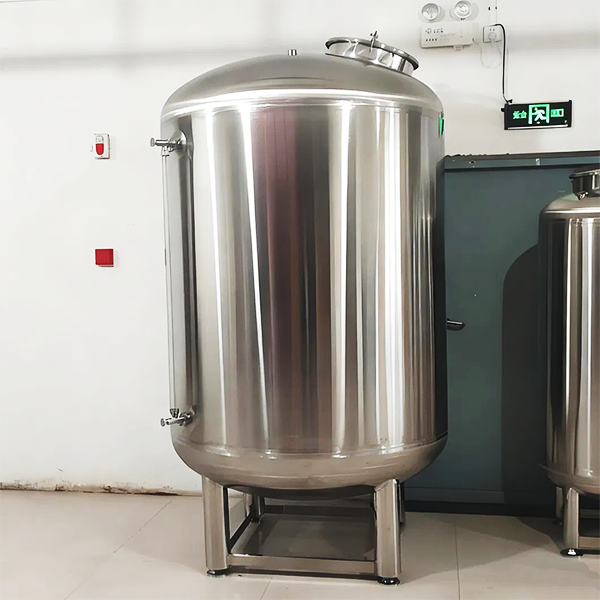
A stainless steel fermentation vessel is a closed or partially closed tank designed to hold wort, beer, or other fermentable liquids during the fermentation stage. Inside the vessel, yeast converts sugars into alcohol, carbon dioxide, and flavor compounds. The vessel may include features such as a cooling jacket, pressure capability, sanitary fittings, sampling ports, manways, temperature sensors, and internal cleaning systems. These features allow brewers to manage fermentation accurately while maintaining a hygienic environment.
In modern brewing applications, the term stainless steel fermentation vessel may refer to several types of tanks, including:
- Fermentation tanks for primary fermentation
- CylindroConical fermenters for yeast collection and sediment separation
- Bright tanks used after fermentation for carbonation and conditioning
- Unitanks that support both fermentation and carbonation in one vessel
- Open-top fermentation vessels for specific brewing styles and traditional processes
While designs vary by brewery scale and product type, the core purpose remains the same: to create a controlled, sanitary, and efficient environment for fermentation.
Why Stainless Steel Is the Preferred Material in Brewing
Stainless steel has become the dominant material for fermentation equipment because it performs well under demanding brewing conditions. It resists corrosion caused by moisture, acids, cleaning chemicals, and frequent sanitation cycles. It does not absorb flavors or odors, which helps preserve product purity. It also supports modern process automation and can be engineered to meet exact brewing specifications.
Compared with materials such as plastic, carbon steel, or wood, stainless steel offers a superior balance of hygiene, strength, and long-term value. For commercial brewing environments, this material provides the reliability needed for repeated batch production and strict quality control.
Key Advantages of a Stainless Steel Fermentation Vessel
Advantage |
Description |
Brewing Impact |
|---|
Corrosion resistance |
Stainless steel resists rust and chemical damage in wet brewing environments. |
Longer equipment life and reduced maintenance costs. |
Sanitary design |
Smooth surfaces and cleanable fittings support hygienic production. |
Lower contamination risk and improved product safety. |
Temperature control |
Jacketed tanks allow precise cooling or heating during fermentation. |
Better yeast management and more consistent beer flavor. |
Flavor neutrality |
Stainless steel does not react with beer or absorb aromas. |
Preserves recipe character and batch consistency. |
Pressure capability |
Many vessels can operate under controlled pressure. |
Supports carbonation, transfer, and closed fermentation. |
Durability |
Strong construction withstands repeated use and cleaning. |
Reliable performance in high-volume brewing operations. |
Scalability |
Available in multiple sizes and configurations. |
Suitable for startups, craft breweries, and industrial breweries. |
Common Applications in Modern Brewing
The stainless steel fermentation vessel is used in many brewing workflows. Its versatility makes it suitable for different beverage categories and process requirements. In modern breweries, these vessels are commonly used for:
- Beer fermentation in craft, micro, and commercial breweries
- Ale and lager production with temperature-specific fermentation control
- Dry hopping in fermentation-capable tanks
- Secondary conditioning before packaging
- Pressure fermentation for faster turnaround and carbonation retention
- Cider and hard seltzer production requiring sanitary processing
- Kombucha fermentation in food-grade stainless steel systems
- Pilot brewing and recipe development for new product testing
Because brewing styles vary widely, the vessel design must match the intended fermentation process. For example, lager fermentation often requires tighter temperature control, while some craft beer styles may benefit from advanced pressure management or yeast Harvesting features.
Main Types of Stainless Steel Fermentation Vessels
Type |
Typical Use |
Key Features |
|---|
Cylindroconical fermenter |
Primary fermentation and yeast collection |
Conical bottom, cooling jacket, yeast dump valve |
Unitank |
Fermentation, conditioning, and carbonation |
Pressure-rated, versatile, space-saving |
Open fermenter |
Traditional brewing styles |
Open top, easy access, style-specific process |
Bright tank |
Post-fermentation storage and carbonation |
Low oxygen pickup, pressure-ready, polished finish |
Horizontal fermenter |
Specialty fermentation and cellar use |
Unique shape, often used for traditional processes |
Pilot fermenter |
Small-scale testing and product development |
Compact size, flexible operation, easy sampling |
Important Construction Features
When evaluating a stainless steel fermentation vessel for modern brewing applications, several construction details influence performance, safety, and ease of use. These details can affect fermentation quality, cleaning efficiency, and production flexibility.
1. Material Grade
Most brewing vessels are made from food-grade stainless steel, commonly 304 or 316 stainless steel. Grade 304 is widely used for general brewing applications because it offers excellent corrosion resistance and value. Grade 316 provides enhanced resistance to aggressive chemicals and certain acidic environments, making it suitable for more demanding conditions.
2. Surface Finish
A smooth internal surface reduces the risk of bacterial buildup and makes cleaning easier. Polished interior finishes are standard in sanitary brewing systems. The smoother the finish, the easier it is to maintain hygiene and reduce contamination risks.
3. Cooling Jacket
Many stainless steel fermentation vessels include dimple jackets or glycol jackets that circulate coolant around the tank. This feature allows brewers to control fermentation temperature precisely, which is critical for yeast performance and flavor development.
4. Pressure Rating
Some vessels are designed to operate under pressure. Pressure-rated tanks are useful for closed fermentation, natural carbonation, and safe transfer. They also help reduce oxygen exposure, which improves shelf life and flavor stability.
5. Sanitary Fittings
Tri-clamp fittings, sanitary valves, sample ports, and hygienic seals are common in brewing vessels. These components help keep the system clean, easy to service, and compatible with brewery-standard connections.
6. Manway Design
A manway allows access for cleaning, inspection, and maintenance. Depending on vessel size and design, the manway may be side-mounted or top-mounted. Good access improves operational efficiency and simplifies servicing.
Typical Specifications of a Stainless Steel Fermentation Vessel
Specification |
Common Range |
Notes |
|---|
Material |
304 stainless steel / 316 stainless steel |
Food-grade construction for sanitary brewing use |
Capacity |
100 L to 100,000+ L |
Available for pilot, craft, and industrial scales |
Surface finish |
Polished, sanitary interior |
Improves cleanability and reduces contamination risk |
Cooling system |
Single-zone or multi-zone jacket |
Supports fermentation temperature control |
Pressure capability |
Atmospheric to pressure-rated |
Depends on vessel design and application |
Insulation |
Optional or standard |
Helps maintain stable temperature |
Bottom design |
Conical, dish, or flat bottom |
Conical bottoms are common for yeast removal |
Accessories |
PRV, thermowell, sample valve, racking arm |
Supports safe and efficient brewing operations |
Mobility |
Fixed or mobile |
Depends on brewery layout and capacity |
Cleaning method |
CIP-compatible |
Enables automated sanitation workflows |
How Stainless Steel Fermentation Vessels Improve Brewing Quality
Quality control is one of the most important reasons breweries choose stainless steel fermentation vessels. Controlled fermentation directly affects aroma, body, mouthfeel, attenuation, and final alcohol content. Since fermentation is sensitive to temperature, oxygen, and contamination, a well-designed vessel helps maintain the exact environment needed for stable results.
Temperature consistency is especially important. If fermentation gets too warm, yeast can produce unwanted flavors. If it is too cold, fermentation may slow down or stop. A jacketed stainless steel fermentation vessel helps manage this issue by giving brewers the ability to cool or stabilize the batch at the right stage.
In addition, stainless steel reduces contamination risks because it supports thorough cleaning and sanitation. This is essential for breweries that produce multiple beer styles or frequently switch between recipes. Cleaner equipment means fewer off-flavors, fewer batch losses, and more reliable product quality.
Sanitation and Cleaning Benefits
Sanitation is a major priority in brewing. A stainless steel fermentation vessel is easier to clean than many alternative materials because it has a non-porous surface. Residue, yeast buildup, and biofilm are less likely to remain on a properly designed and polished stainless steel interior.
Most modern brewing vessels are built for CIP, or Clean-In-Place, which allows cleaning solution to circulate through the tank without full disassembly. This saves labor, reduces downtime, and improves consistency in sanitation procedures.
- Reduces contamination risk
- Improves batch-to-batch consistency
- Supports faster turnaround between fermentations
- Minimizes manual cleaning labor
- Helps meet food and beverage hygiene standards
Stainless Steel Fermentation Vessel vs. Other Materials
Material |
Advantages |
Limitations |
|---|
Stainless steel |
Durable, sanitary, corrosion-resistant, flavor-neutral |
Higher initial investment than basic materials |
Plastic |
Low cost, lightweight |
Less durable, can scratch, may retain odors or stains |
Glass |
Non-reactive, visually clear |
Fragile, limited industrial use, harder to scale |
Wood |
Traditional character, specialty flavor influence |
Difficult to sanitize, variable performance, limited control |
Carbon steel |
Strong and economical for some industrial uses |
More prone to corrosion, less ideal for sanitary brewing |
For modern brewing applications, stainless steel is usually the best long-term solution because it balances hygiene, performance, and durability better than most alternatives.
How to Choose the Right Stainless Steel Fermentation Vessel
Choosing the right vessel depends on production goals, beverage style, batch size, available space, and process requirements. Brewers should evaluate the following factors when selecting a stainless steel fermentation vessel:
- Batch size: Match vessel capacity to brewing output and future growth.
- Fermentation style: Choose a design suitable for ales, lagers, pressure fermentation, or specialty beverages.
- Temperature requirements: Determine whether a cooling jacket or multi-zone system is needed.
- Pressure needs: Decide if atmospheric or pressure-rated operation is required.
- Cleaning workflow: Ensure the vessel supports efficient CIP and sanitation procedures.
- Space layout: Consider footprint, height, access, and cellar logistics.
- Future expansion: Select a vessel that supports business growth and scaling.
A thoughtful equipment choice can improve operational efficiency, reduce waste, and support long-term brewery success. For many brewers, the right stainless steel fermentation vessel is not just a tank—it is a core production asset.
Common Accessories and Optional Features
Depending on the brewing application, a stainless steel fermentation vessel may be equipped with optional components that improve process control and ease of use. These features can be especially valuable in commercial and professional brewing setups.
Accessory |
Function |
Typical Benefit |
|---|
Thermowell |
Measures internal liquid temperature |
Accurate temperature monitoring |
Cooling jacket |
Circulates coolant for temperature control |
Stable fermentation environment |
Sample valve |
Allows liquid sampling during fermentation |
Quality checks without opening tank |
Pressure relief valve |
Protects tank from overpressure |
Safer operation |
Racking arm |
Transfers clear beer from tank |
Cleaner product extraction |
Yeast dump valve |
Removes settled yeast and trub |
Improved separation and process control |
CIP spray ball |
Distributes cleaning solution inside the vessel |
Efficient automated sanitation |
Level gauge |
Shows liquid level in the tank |
Helps manage batch volume |
Stainless Steel Fermentation Vessel in Craft Brewing
Craft breweries often rely on stainless steel fermentation vessels because they need flexibility, repeatability, and clean flavor profiles across multiple beer styles. Small and medium breweries may use compact fermenters to handle pilot batches, seasonal releases, and limited-edition recipes. As production grows, these same breweries can expand with additional vessels of similar design to maintain process consistency.
Craft brewing also demands excellent temperature management because different yeast strains and beer styles require specific conditions. A stainless steel fermentation vessel gives brewers the control they need to produce crisp lagers, fruity ales, sour beers, or hop-forward IPAs with predictable results.
Performance Factors That Affect Brewing Results
Several performance factors influence how well a stainless steel fermentation vessel supports modern brewing applications. These include thermal transfer efficiency, sanitation quality, pressure handling, internal geometry, and valve layout. Even small design differences can affect yeast behavior, sediment removal, and final beer clarity.
- Thermal control: Helps maintain the target fermentation temperature
- Headspace design: Supports foam expansion and gas management
- Conical angle: Affects yeast harvesting and trub removal
- Seam quality: Important for hygiene and cleaning performance
- Drainage design: Helps reduce product loss and improve transfer efficiency
Market Trends in Modern Brewing Equipment
The brewing industry continues to move toward automation, hygienic design, and energy-efficient production. Stainless steel fermentation vessels are evolving to support these goals through improved insulation, advanced cooling systems, pressure-ready designs, and smart monitoring options. Brewers increasingly want equipment that reduces manual labor while improving consistency and traceability.
Another major trend is multi-purpose use. Many breweries want vessels that can ferment, carbonate, condition, and store beer in one system. This reduces floor space requirements and improves operational efficiency. As a result, the stainless steel fermentation vessel has become more than just a fermentation container—it is now a flexible process platform for modern beverage production.
Conclusion
The stainless steel fermentation vessel is a foundation of modern brewing applications. Its durability, sanitary construction, temperature control capability, and flavor-neutral performance make it one of the most valuable assets in beer and beverage production. From craft breweries to large-scale operations, stainless steel fermentation vessels support cleaner fermentation, better product consistency, and more efficient workflows.
For breweries focused on quality, scalability, and long-term value, stainless steel remains the standard material for fermentation equipment. By choosing the right vessel design, size, and feature set, brewers can improve production performance and maintain the reliable fermentation conditions needed for successful modern brewing.
Quick SEO-Friendly Summary
A stainless steel fermentation vessel for modern brewing applications provides sanitary processing, corrosion resistance, precise temperature control, pressure capability, and long-term durability. It is widely used in craft breweries, commercial breweries, pilot brewing systems, and specialty beverage production. With features such as cooling jackets, conical bottoms, CIP compatibility, and sanitary fittings, the stainless steel fermentation vessel remains a top choice for high-quality fermentation and scalable brewing operations.
 +86 29-87031531





 телефон
Комментарий
(0)